In your village
Plumber in Den Dolder
Municipality of Zeist. Somebody is with you in 35 to 70 minutes, counted from your call and not from the moment the van sets off.
Phone answered
07:00 to 22:00, every day
Travel time to Den Dolder
usually 35 to 70 minutes
Call-out charge (voorrijkosten)
€ 25 on top before 08:00, after 18:00 and on Sundays
What we run into here
The faults Den Dolder produces
Long private supply pipes across own land in the zone around the Willem Arntsz Hoeve estate.
Pre-war ribbon development along Dolderseweg and Baarnseweg with ageing pipework.
Galvanised steel in the post-war streets: not repairable with a clamp, but replaceable.
Houses from the 1970s with the hot water run cast into the floor screed.
Deep water table, so a wet crawl space here is almost always a leak or condensation.
Wooded surroundings, and therefore root ingress in older outside drains.
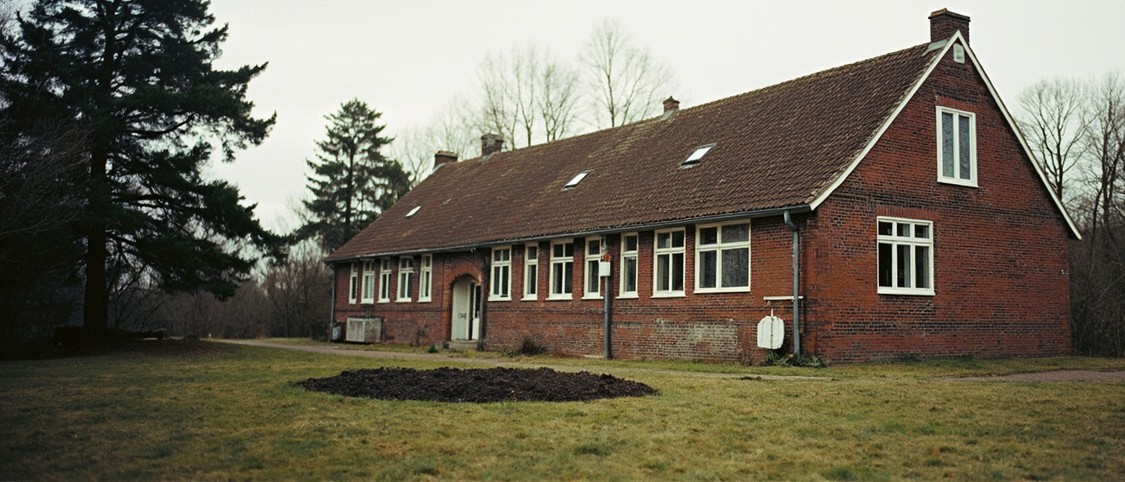
Den Dolder belongs to the municipality of Zeist and lies at its northern end, against the boundary with Soest and De Bilt, surrounded by woodland. The village was largely built between 1920 and 1970, around the railway station and along the Dolderseweg and the Baarnseweg. That gives a housing stock with a clear dividing line: pre-war ribbon development along the through roads, and post-war streets behind it.
The grounds of the Willem Arntsz Hoeve set the character of the northern side. It is a parkland care estate with its own paths and scattered buildings, and the houses in the zone around it often have long supply pipes running across their own land. For a leak that means one thing first: establish where the property line and the water meter are, because that is also the line between what is yours and what is the utility's. Everything past the meter is the owner's responsibility, however far it runs.
The ground here is the same sand as in the rest of the municipality, with the water table well below. A wet crawl space (kruipruimte) in Den Dolder is therefore almost never ground water; it is a leak or condensation. That saves a great deal of searching, provided it is measured rather than assumed. In the post-war houses galvanised steel still turns up, and in the 1970s houses the hot water pipe often runs inside the floor screed.
All of Den Dolder is inside the area, the streets by the station and along the Pleineslaan included. Reckon on 35 to 70 minutes.
Can this wait until tomorrow?
Then there is no reason to sit in a queue. Put your number in the form with a line about what is going on, and the call back comes at an hour you name yourself. Write it in English.
Problems
What we come to Den Dolder for
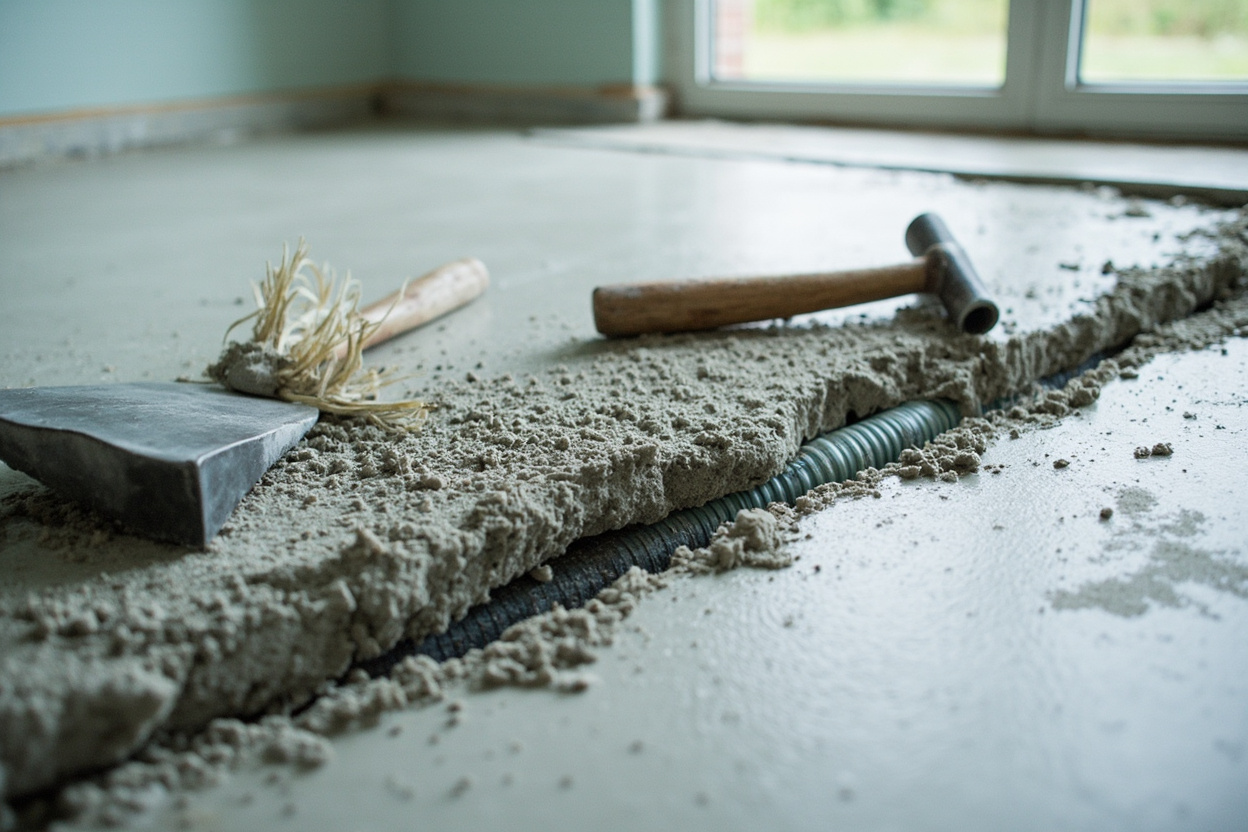 Leak repairA patch that keeps growing, a puddle by the meter cupboard, or a bill that does not add up.
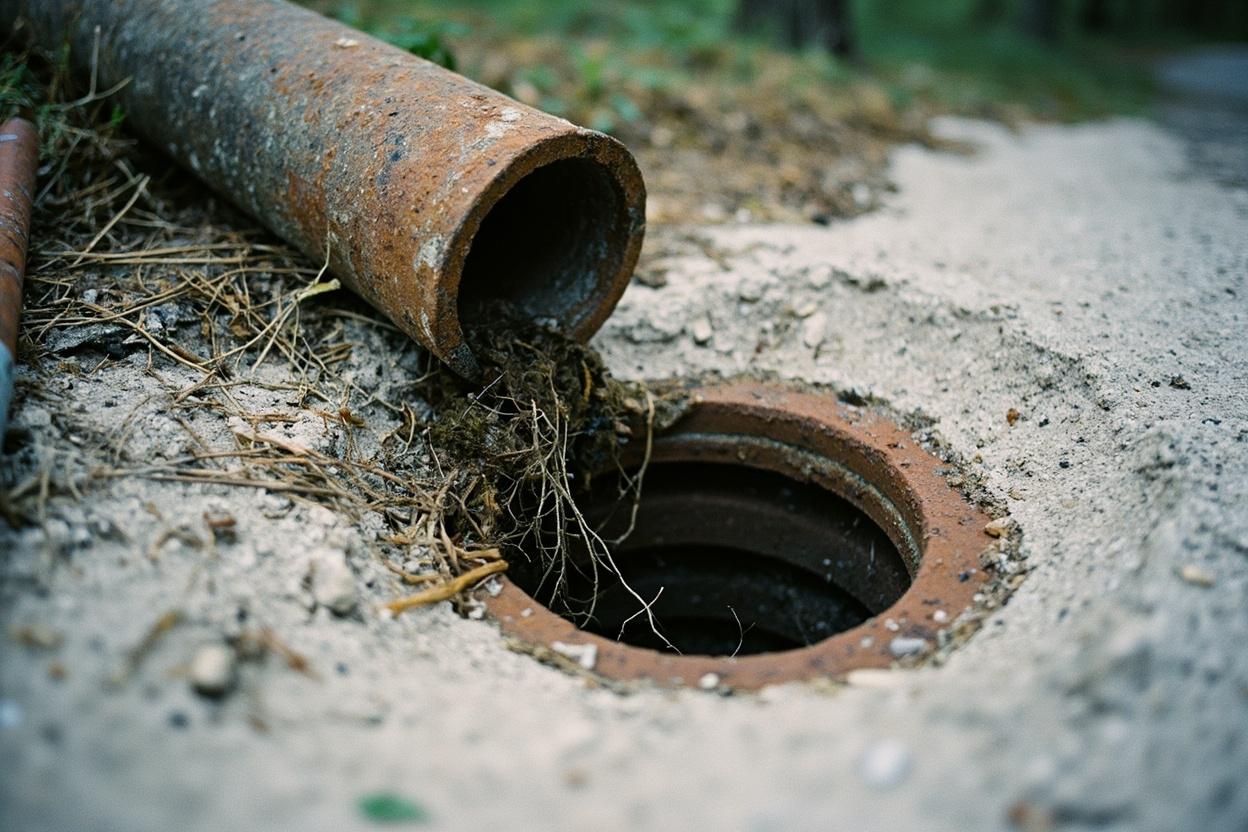 Blocked drains and sewerWater standing still, a gully overflowing, or the same blockage for the second time.
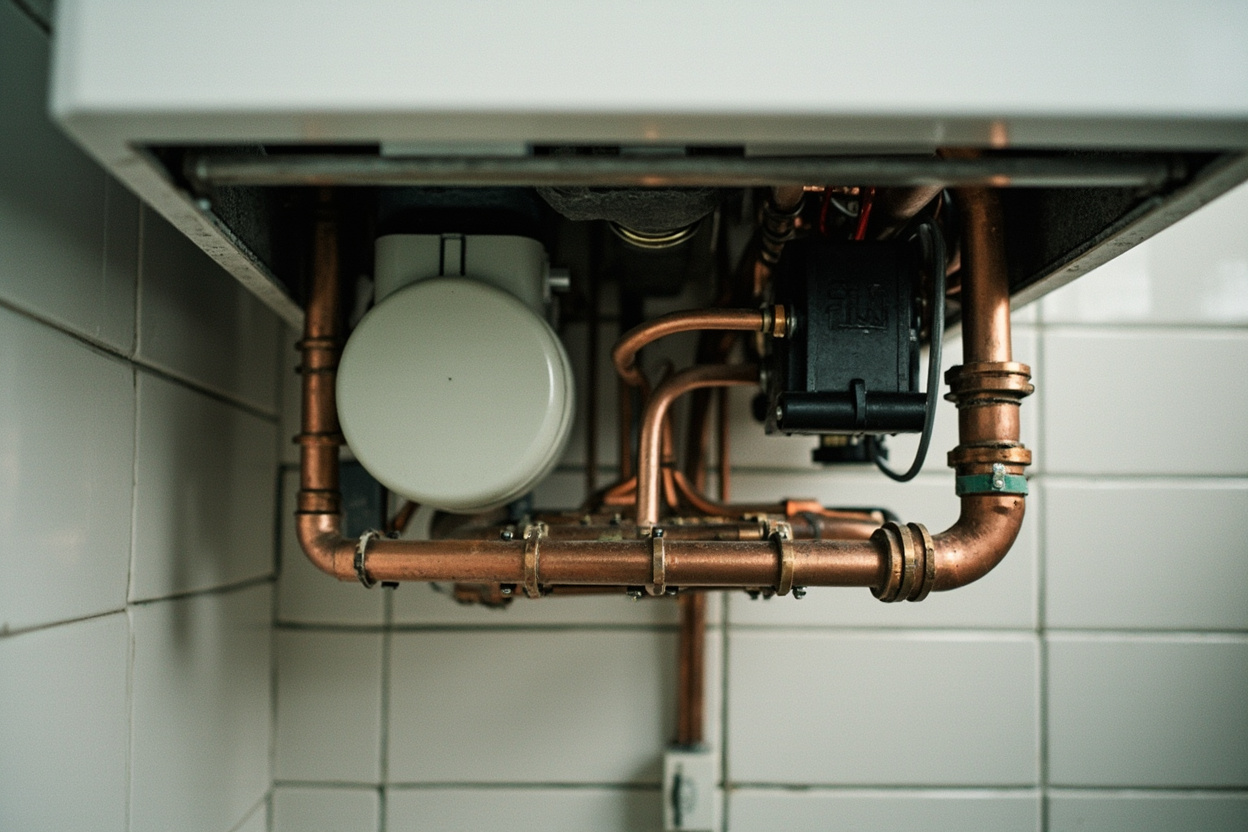 Boiler and central heatingA code on the display, radiators that stay cold, or hot water that never arrives.
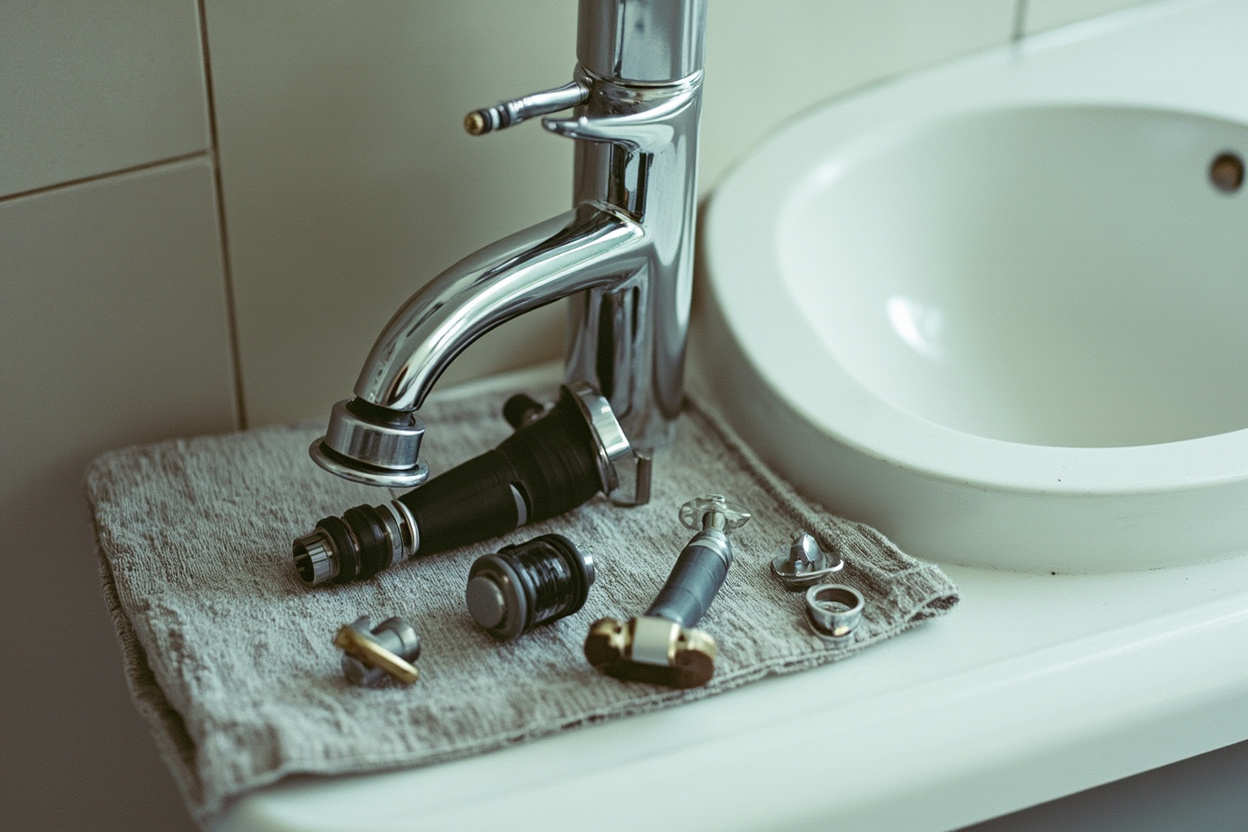 Taps and toiletsSmall work that grows expensive while it waits: dripping, running, smelling.
Amounts
What it costs in Den Dolder
One set of figures across the whole area. The travel time changes from village to village; the invoice does not.
| Item | Amount |
|---|---|
| Call-out charge | € 45 |
| Hourly rate | € 65 to € 85 |
| Out-of-hours surcharge | € 25 |
| After the first hour | per 15 min |
| Parts | separate |
One call-out charge covers the visit. Tap and sanitary work bill at the lower hourly figure; jetting, camera work and boilers at the higher one. A flat amount joins the bill before 08:00, after 18:00 and on Sundays, never a percentage of anything. Quarter hours are counted after the first hour, and every part gets its own line.
If the job takes longer than estimated. On the doorstep you are told what looks necessary and roughly what that comes to. Should the job turn out bigger, you hear it while the panel is still off, not two weeks later on paper. Nothing past € 400 happens until you have said yes to it.
Not sure whether this counts as an emergency?
Water standing on a floor, nothing working at all, a drain backing up over the rim: ring. Anything that can stay as it is until tomorrow can go through the form, and it will be at the top of the list early in the morning.
How much later is Den Dolder than Zeist itself?
Usually within 35 to 70 minutes. Den Dolder sits at the northern edge of the municipality, which is slightly further than Zeist itself; you hear that time in advance rather than afterwards.
My crawl space is wet. Is that ground water?
On the Heuvelrug, almost never. The water table sits deep here and the sand drains well, so water under the floor normally comes from a leaking supply or waste pipe, or it is condensation against a cold floor. We measure that with a moisture meter before anything is opened up, because the difference decides whether something has to be dug out or simply ventilated better.
Who pays for a leak in the pipe on my own driveway?
From the water meter onwards the pipe is yours, even where it runs tens of metres across your own land. That situation is more common in Den Dolder and Bosch en Duin than elsewhere, and it is why a leak there becomes expensive quickly when it goes unnoticed. A sudden jump in consumption with nothing visible is the signal to have it measured. Your water company (Vitens in this region) can confirm the meter reading, but the pipe past it is not theirs to fix.
The other places in the area
Not urgent
Leave us your number
This is for anything that can keep until tomorrow. Standing water, or nothing working at all, belongs on the phone instead: nobody watches this form all evening. English is fine.