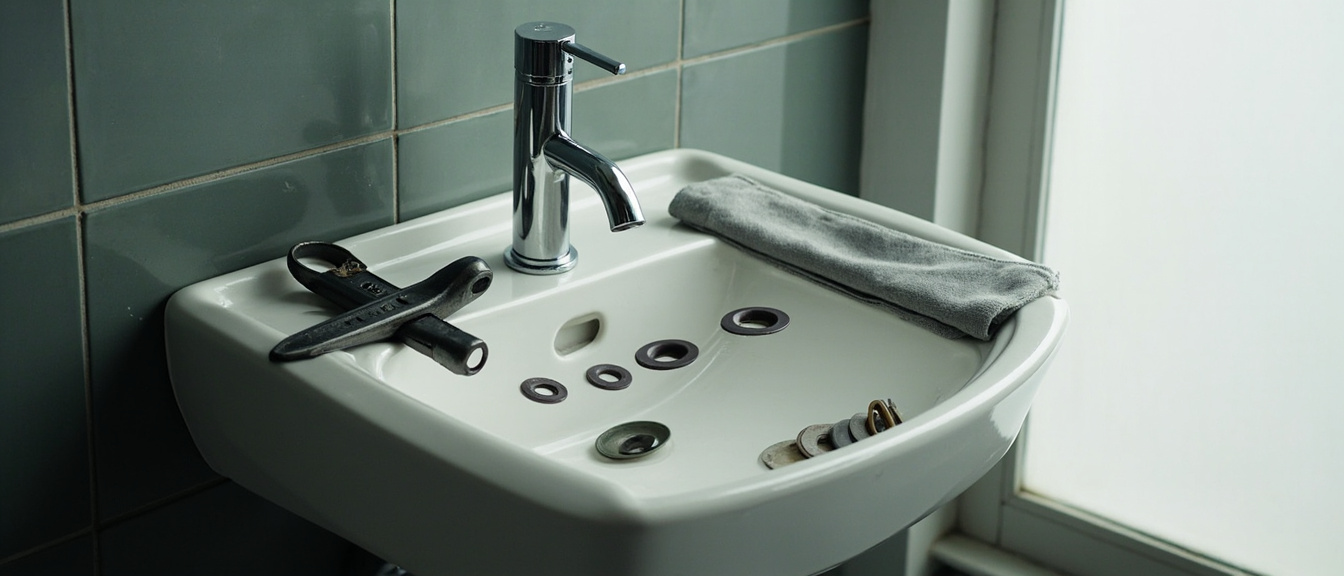
Emergency work
Taps and toilets in Zeist
Small work that grows expensive while it waits: dripping, running, smelling.
Phone answered
07:00 to 22:00, every day
Travel time
usually 40 to 80 minutes
Call-out charge (voorrijkosten)
€ 25 on top before 08:00, after 18:00 and on Sundays
Problems
How we go about it
What you can do until we arrive. Under the basin, and low down behind the pan, sits a small isolating valve of its own; turn that and the dripping stops until somebody arrives. A bowl under a weeping trap catches the rest. Then the photograph of the tap, taken from the side: the side view carries the profile, and the profile is what says which cartridge to bring.
What we carry as standard. Float valves and flush seals. O-rings, traps and shower hoses. Tap cartridges in the sizes that come up most often, and descaler for aerators and thermostatic heads. For a tap replaced outright, or a concealed cistern carrying a badge no longer sold in the Netherlands, a part may still have to be ordered in.
Small job, short bill. The first hour is charged whole whether it gets used or not, and after that the clock moves in quarters. A job that is over in twenty minutes therefore comes to coming out plus one hour, and there it stops. Nobody should be paying half a day for a worn washer. If two or three small things have been waiting, put them on the same visit: coming out is charged once, however long the list turns out to be.
Zeist draws its drinking water off the ridge, and ridge water is hard. That single fact decides most of what fails in a bathroom here. Lime picks the places where the water runs hottest and where something has to move: the pair of ceramic discs inside a tap, the mesh of an aerator, the cartridge of a thermostatic shower. A handle that has grown heavy, a shower that overshoots and then dives, a spout that weeps whichever way you turn it: all three are the same deposit at three different ages.
None of that puts water on a floor, which is exactly why it stays. A cistern feeding the pan without a sound passes several hundred litres between one breakfast and the next; nothing drips, nothing smells, and the first news of it arrives on the annual water statement. Of the four kinds of work on this site, this is the cheapest hour to buy and the dearest one to put off.
Most of it is over inside a single visit. Cartridges, float valves, flush seals, traps, shower hoses, waste plugs and seats travel in the van, along with descaler for the parts worth rescuing rather than replacing, and a basin or a pan that has worked itself loose gets bolted back down while somebody is there anyway. The one thing that cannot be guessed at is the tap on your own wall. Photograph it from the side and not from above: the profile and the reach of the spout are what name the model, and in the retrofitted bathrooms of the older houses here that photograph is the difference between one visit and two.
Can this wait until tomorrow?
Then there is no reason to sit in a queue. Put your number in the form with a line about what is going on, and the call back comes at an hour you name yourself. Write it in English.
Amounts
What it costs
One set of figures for the whole site. No emergency tariff exists that waits until somebody is standing in your hallway to introduce itself.
All rates and how time is counted
If the job takes longer than estimated.
On the doorstep you are told what looks necessary and roughly what that comes to. Should the job turn out bigger, you hear it while the panel is still off, not two weeks later on paper. Nothing past € 400 happens until you have said yes to it.
| Item | Amount |
|---|---|
| Call-out charge | € 45 |
| Hourly rate | € 65 to € 85 |
| Out-of-hours surcharge | € 25 |
| After the first hour | per 15 min |
| Parts | separate |
One call-out charge covers the visit. Tap and sanitary work bill at the lower hourly figure; jetting, camera work and boilers at the higher one. A flat amount joins the bill before 08:00, after 18:00 and on Sundays, never a percentage of anything. Quarter hours are counted after the first hour, and every part gets its own line.
What matters here
Background
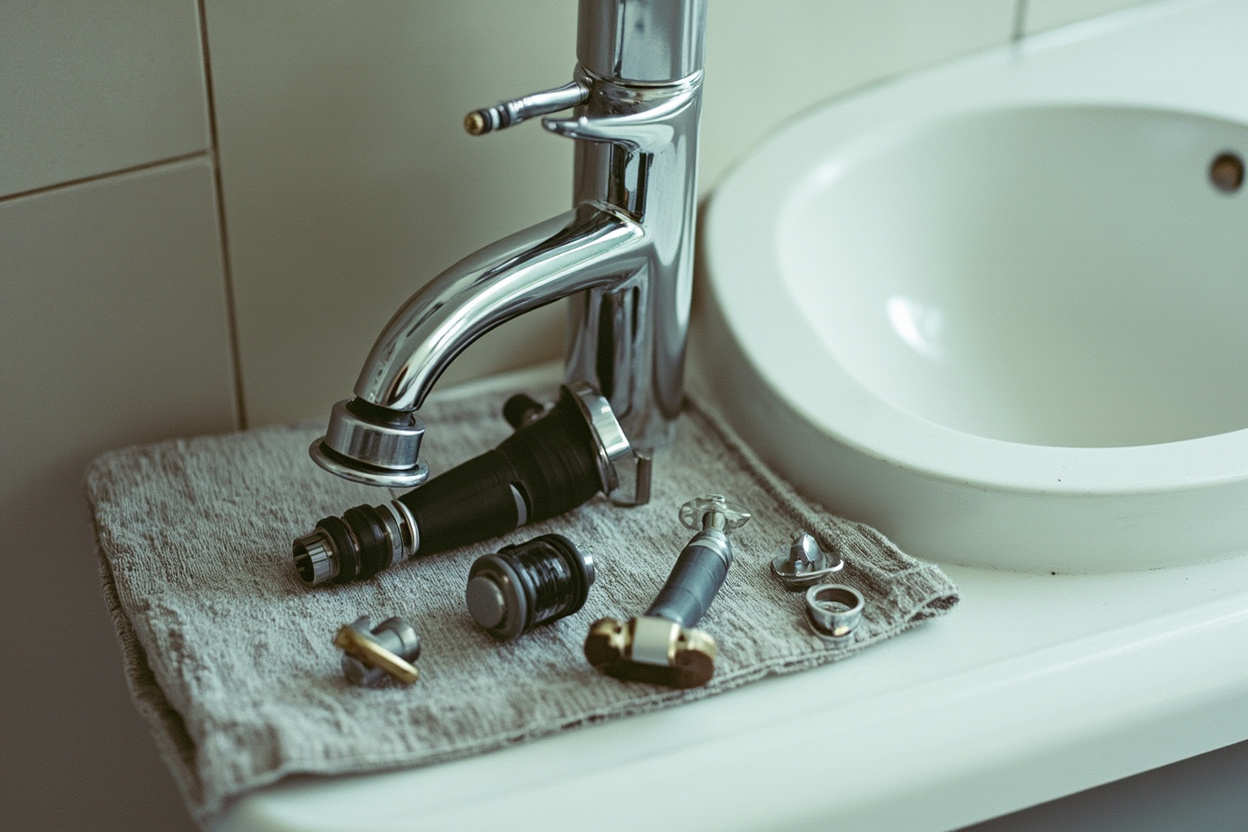
The commonest call on this page is a cistern that will not stop. Two parts decide it and they sit side by side: the float valve that should shut the inlet off, and the seal on the flush valve that should hold back what has already arrived. A float valve furred with lime closes late or not at all, and the surplus leaves down the overflow, which on a modern cistern discharges into the pan where nobody hears it. A hardened flush seal does the same thing from the other side. Standard parts answer both, concealed cisterns (inbouwreservoir) included, as long as the flush plate lifts out of the wall, and almost every one of them does. Tiling comes off only for a cistern body that has split itself, and that is genuinely rare.
A spout that drips has worn a ceramic disc through or hardened an O-ring, and that is a quarter of an hour. A mixer letting hot creep across into the cold has a spent cartridge behind the lever. Hard water brings both on sooner than soft water does, and it is also the reason an aerator is worth unscrewing into a jar of descaler instead of throwing away: the mesh comes back, a seized cartridge does not. One noise here is not a tap fault at all. The bang in the pipework when a tap is shut quickly is a pressure surge, answered with an arrestor or with proper clipping, and in the older houses here, where long runs cross a loft with nothing holding them, it carries through the whole building.
A smell out of a waste is seldom the sewer itself. Nine times in ten it is a trap (sifon) standing empty, and in this municipality that fault has an address: the cloakroom of a large house in Bosch en Duin or Austerlitz that nobody has flushed since the summer. The seal is water, water evaporates, and the drain then opens straight into the hall. A jug refills it. If the smell is back the next day, something else on the same branch is pulling that trap empty as it discharges, and the answer is a vent rather than more water.
Around the Slotlaan and the Broederplein there is one extra constraint. Those are protected buildings, so pipework bends to the building and never the other way round. Occasionally that means the sensible route is not the short one, and you hear about that before the work is priced rather than afterwards.
Where we come for this
- Plumber in Zeist (30 to 60 minutes)
- Plumber in Den Dolder (35 to 70 minutes)
- Plumber in Austerlitz (40 to 80 minutes)
- Plumber in Bosch en Duin (35 to 70 minutes)
Not sure whether this counts as an emergency?
Water standing on a floor, nothing working at all, a drain backing up over the rim: ring. Anything that can stay as it is until tomorrow can go through the form, and it will be at the top of the list early in the morning.
One dripping tap. Am I wasting your time?
Put a figure on it before you decide. Drinking water is billed by the cubic metre and the sewerage charge rides along with it, so a cistern trickling day and night gets through more than one visit costs well before the year is out. And if it really is only the tap, hang a second small job on the same call, a trap or a shower hose, because coming out is paid for once whatever else gets done.
I bought the tap already. Will you fit it?
Certainly, provided the box still holds its flexible tails and washers. If the new tap turns out not to suit what is already on the wall, you hear it while the old one is still fitted, not once it is in pieces on the floor.
Does the wall come off for a concealed cistern?
Hardly ever. Take the flush plate off and both suspects are within reach: the float valve and the flush valve, which happen to be the only two parts of a cistern that move at all. Tiling comes off for a cistern body that has split, and that is a fault most households never meet.
Can limescale really destroy a tap?
Destroy is the wrong word; jam is the right one. The water here is hard, and scale grows on whatever moves: a thermostatic mixer goes stiff and loses its grip on the temperature, an aerator starts spraying sideways. Aerators come clean in a jar of descaler. A cartridge that has locked solid costs less to swap than to free.
The other problems we fix
Not urgent
Leave us your number
This is for anything that can keep until tomorrow. Standing water, or nothing working at all, belongs on the phone instead: nobody watches this form all evening. English is fine.